Generator Wattage Guide: How Many Watts Do I Need?
Outage-Prep Essentials
This site runs on Amazon affiliate commissions and advertising — buying through our links costs you nothing extra and helps keep it free for everyone.
Read our mission →Two numbers matter when sizing a generator: running watts (what an appliance draws continuously) and surge watts (the brief spike when a motor starts — often 2-3x the running wattage). A generator needs enough surge capacity to start your largest motor while everything else is already running.
Common approximate running watts: refrigerator ~700W, sump pump ~800W, furnace fan ~600W, well pump ~1,000W, window AC ~1,200W, central AC ~3,500W. Add these up for your must-run list, then check the surge rating of whichever appliance has the largest motor.
A generator's rated (running) watts must cover your total running load; its surge/peak watts must cover your running load minus the largest single motor's running watts, plus that motor's surge watts.
Our generator sizing calculator does this math for you — check off your appliances and it estimates a sized-to-fit tier.
Relevant picks
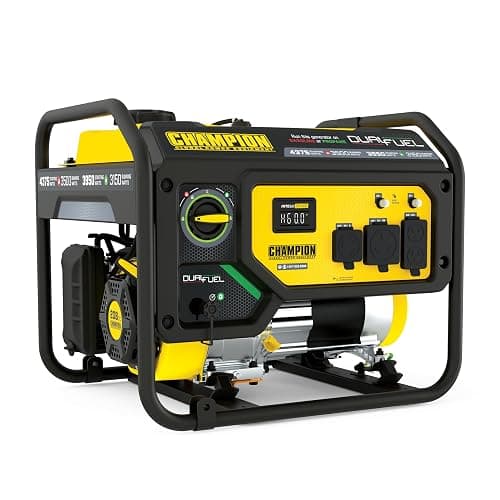
Champion Power Equipment 4375-Watt Dual Fuel RV Ready Portable Generator with Free 3-Year Warranty
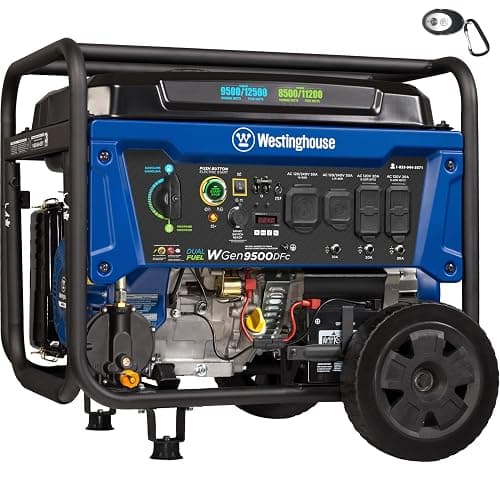
Westinghouse 12500 Peak Watt Dual Fuel Home Backup Portable Generator, Remote Electric Start, Transfer Switch Ready, Gas and Propane Powered, CO Sensor
This site runs on Amazon affiliate commissions and advertising — buying through our links costs you nothing extra and helps keep it free for everyone.
Read our mission →