How Does a Portable Generator Work?
Outage-Prep Essentials

This site runs on Amazon affiliate commissions and advertising — buying through our links costs you nothing extra and helps keep it free for everyone.
Read our mission →A portable generator's engine burns fuel (gasoline, propane, or both for dual-fuel models) to spin a shaft connected to an alternator. The alternator uses electromagnetic induction — a spinning magnet inside a coil of wire — to generate alternating current (AC), the same type of power your home's outlets use.
Most portable generators run the engine at a fixed 3,600 RPM to produce standard 60Hz household power, which is why they're loud at idle — the engine speed is tied directly to keeping the output frequency correct, not to how much power you're actually drawing. Inverter generators are the exception: they generate raw power at variable engine speed, then use electronics to convert it to clean, stable 60Hz output, which is why they can throttle down (and run quieter) when the load is light.
'Rated watts' is what a generator can sustain continuously; 'surge' or 'starting watts' (a higher number) is a short burst it can supply when a motor — a refrigerator compressor, a well pump, an AC unit — first kicks on, since motors draw several times their running wattage for a fraction of a second at startup. Undersizing a generator by looking only at rated watts and ignoring a motor's surge draw is the most common reason a generator that 'should' be big enough trips or stalls when a refrigerator or pump starts.
Fuel type is a real tradeoff, not just a spec: gasoline generators are widely available and cheap to run but the fuel degrades in storage within a few months without a stabilizer; propane stores indefinitely and burns cleaner but yields somewhat less power per unit of fuel; dual-fuel units let you use whichever is available during a multi-day outage when one runs out.
See our generator wattage guide for how to size one to your actual appliances, not just the number on the box.
Relevant picks
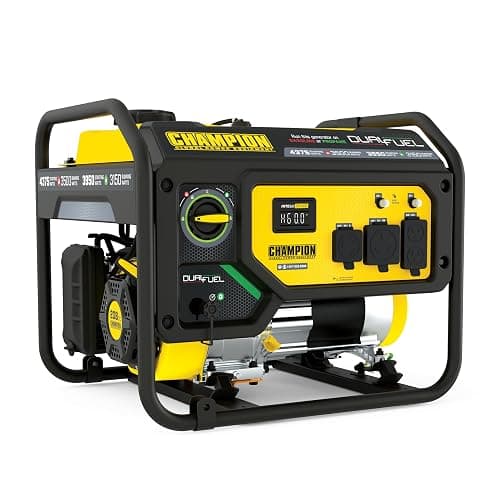
Champion Power Equipment 4375-Watt Dual Fuel RV Ready Portable Generator with Free 3-Year Warranty
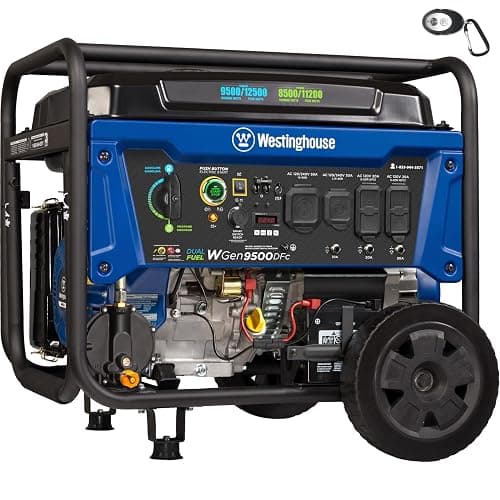
Westinghouse 12500 Peak Watt Dual Fuel Home Backup Portable Generator, Remote Electric Start, Transfer Switch Ready, Gas and Propane Powered, CO Sensor
This site runs on Amazon affiliate commissions and advertising — buying through our links costs you nothing extra and helps keep it free for everyone.
Read our mission →