Why Does Texas Lose Power So Often? ERCOT, Winter Storm Uri, and What 12 Years of Data Show
Published August 9, 2026
Outage-Prep Essentials
No ads. No data selling. This site runs entirely on Amazon affiliate commissions — buying through our links costs you nothing extra and keeps it free for everyone.
Read our mission →Sixty-two of Texas's 254 counties currently carry a Grade F for power reliability — the lowest score there is, based on 12 years of real outage data. That's not bad luck spread evenly across the state. It's the visible result of a choice Texas made almost a century ago: to run its own power grid, cut off from the rest of the country.
This guide explains why that choice matters, what happened when it failed in 2021, and what has — and hasn't — changed since.
Texas Runs Its Own Power Grid — And That's the Root Cause
Most of the U.S. electric grid is split into two giant networks that share power across state lines: the Eastern Interconnection and the Western Interconnection. Texas mostly isn't part of either one.
About 90% of Texas's electricity flows through ERCOT (the Electric Reliability Council of Texas), a grid that stays almost entirely inside the state's borders. The reason traces back to 1935, when the Federal Power Act gave the federal government authority over any electricity sold across state lines. Texas utilities kept their system self-contained to avoid that oversight, and ERCOT formalized the arrangement when it was created in 1970.
A few exceptions: El Paso, part of the Panhandle, and part of East Texas sit on the Eastern or Western grid instead. A handful of small DC power lines do connect ERCOT to its neighbors — but they can only move a trickle of electricity, nowhere near enough to bail the state out during a real emergency.
The Tradeoff Behind Going It Alone
Running an independent grid isn't automatically a bad idea. It comes with real advantages:
- More control over market rules, without waiting on federal regulators
- A competitive retail market, where Texans can shop between electricity providers
- Historically lower prices in many years, compared to more regulated markets
The tradeoff is the one that matters most in a crisis: when demand spikes past what Texas can generate on its own, there's no meaningful way to import power from a neighboring state. Everyone else can watch. Nobody else can help.
Winter Storm Uri: When the Tradeoff Failed
In February 2021, a brutal, multi-day freeze pushed that tradeoff to its limit. Natural gas wells, pipelines, and power plants across Texas weren't built to handle sustained cold that severe, and many froze or lost fuel supply. Wind turbines underperformed too, though wind typically contributes a smaller share of expected winter capacity to begin with. At the worst point, roughly half of the state's generating capacity was offline — right as demand for heating hit a record high.
With no way to import enough power to close that gap, ERCOT ordered rolling blackouts to keep the whole grid from collapsing. For millions of Texans, those "rolling" outages lasted days, not hours.
The human and financial toll is still debated, since it depends on how it's measured. Texas's official count lists deaths in the low hundreds; independent statistical analyses using CDC excess-mortality data have suggested the true toll may run several times higher. Estimates of the total economic cost range from roughly $80 billion to nearly $300 billion, depending on what's included.
The event was significant enough that it became a benchmark for outage research generally. The event-reconstruction method behind this site's own county-level data was tested against an independently published Uri dataset, and reproduced it almost exactly — full details are in our methodology.
It's Not Just Winter — Hurricanes Are the Other Risk
Gulf Coast counties face a second, very different threat. In July 2024, Hurricane Beryl made landfall near Matagorda as "only" a Category 1 storm — yet it knocked out power to well over two million customers across the greater Houston region, and full restoration took more than a week in the hardest-hit areas. Regulators later opened a formal investigation into the utility's storm response.
The lesson: a storm doesn't need to be "major" to cause a prolonged, large-scale outage. What matters more is how local infrastructure — above-ground lines, substations, tree cover — holds up, not the official wind-speed category. Harris County, at the center of that storm, still ranks in the 12th percentile nationally in our own data — one of the least reliable counties in the country.
Has Texas Actually Fixed the Grid Since 2021?
The honest answer is: partly, and unevenly.
What's genuinely better
- Senate Bill 3, passed later in 2021, requires power plants, transmission companies, and the natural gas facilities that feed them to weatherize their equipment, with penalties of up to $1 million for violations.
- The Public Utility Commission adopted formal cold-weather preparedness rules in phases, covering insulation, heat tracing on pipes, and windbreaks around exposed equipment.
- Battery storage capacity has grown enormously — a resource that barely existed during Uri. During a cold snap in January 2026, batteries supplied close to 10% of the grid's power at one point, roughly equivalent to powering 1.75 million homes.
- The grid handled a record-breaking summer demand peak in July 2026 without a single reliability incident.
What's still a gap
A 2025 state audit found weak oversight of natural gas weatherization — inspectors largely let companies decide for themselves what counts as "prepared," and out of thousands of inspections across two winter seasons, only a handful of violations were issued. Separately, federal regulators classified ERCOT "elevated risk" for summer 2026, citing tightening reserve margins as data-center and industrial demand outpaces new generation.
Myth vs. Fact
| Myth | Fact |
|---|---|
| Nothing has changed since Winter Storm Uri. | Texas passed mandatory weatherization rules with real financial penalties, and battery storage has grown enough to visibly help during cold snaps in 2026. |
| The grid is completely fixed now. | A 2025 state audit found weak enforcement of gas-supply weatherization, and federal regulators still rate ERCOT "elevated risk" for 2026. |
| Only winter storms cause major Texas outages. | Hurricane Beryl — just a Category 1 storm — knocked out power to millions of customers for over a week in 2024. |
| Every Texas county faces the same risk. | Reliability varies enormously by county: dozens carry the lowest possible grade, while others rank among the most reliable in the country. |
ERCOT vs. a Typical State Grid
| Texas (ERCOT) | Most other states | |
|---|---|---|
| Federal oversight | Minimal — largely outside FERC jurisdiction | Regulated by FERC |
| Emergency power imports | Very limited (small DC ties only) | Available from neighboring grid members |
| Grid operator | ERCOT (Texas-only) | Regional operator spanning multiple states |
| Retail electricity market | Competitive — customers choose a provider | Varies by state |
| Major interconnections | One, mostly self-contained | Part of the Eastern or Western Interconnection |
Common Mistakes to Avoid
- Assuming a decent statewide average means your county is safe. County-level variation is enormous — Texas has both A-grade and F-grade counties.
- Treating outage risk as winter-only. Beryl proved hurricane season carries its own real risk.
- Assuming nothing has improved since 2021 — real reforms did happen — or swinging to the opposite mistake of assuming the grid is now risk-free.
- Waiting until a storm is forecast to test backup power equipment, instead of testing it well ahead of season.
Tips for Assessing Your Own Risk
- Check your own county's grade instead of relying on the state average — see how all 254 Texas counties compare.
- If you're on the Gulf Coast, plan for hurricane season and occasional winter cold. Further inland or north, winter storms are historically the bigger driver.
- Plan backup power as if the grid can still fail for days — the data shows it still can, even after the post-2021 reforms.
Key Takeaways
- Texas runs an independent grid, ERCOT, covering about 90% of the state — largely disconnected from the rest of the country's electricity supply.
- That isolation is a deliberate, decades-old choice tied to avoiding federal regulation, not a technical accident.
- Winter Storm Uri (2021) and Hurricane Beryl (2024) show two very different ways that isolation and infrastructure gaps turn into real outages.
- Real reforms followed 2021, but a 2025 audit and 2026 federal risk ratings show the progress is uneven.
- Reliability varies enormously by county — look up your specific county rather than assuming the state average applies to you.
The Bottom Line
Texas doesn't lose power more often than other states by accident. It's the direct result of an isolated grid, a mixed record on weatherization enforcement, and a state that faces both winter storms and hurricanes across the same 254 counties. Some of that has genuinely improved since 2021. Some of it hasn't.
The one number that won't change is this: reliability in Texas isn't one statewide story — it's 254 different ones. See the full county-by-county breakdown to find out where your own county stands.
Relevant picks
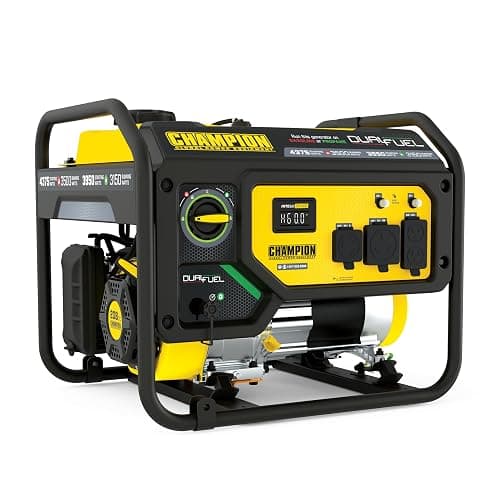
Champion Power Equipment 4375-Watt Dual Fuel RV Ready Portable Generator with Free 3-Year Warranty
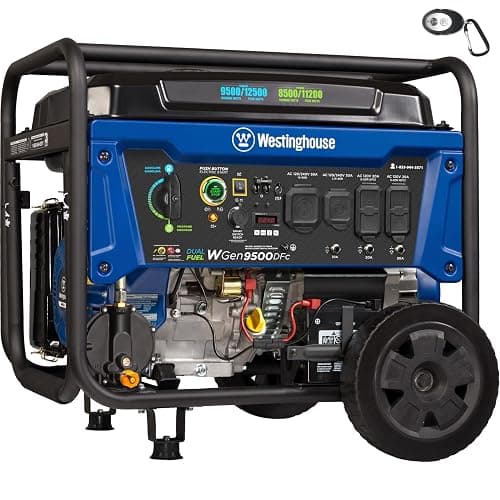
Westinghouse 12500 Peak Watt Dual Fuel Home Backup Portable Generator, Remote Electric Start, Transfer Switch Ready, Gas and Propane Powered, CO Sensor
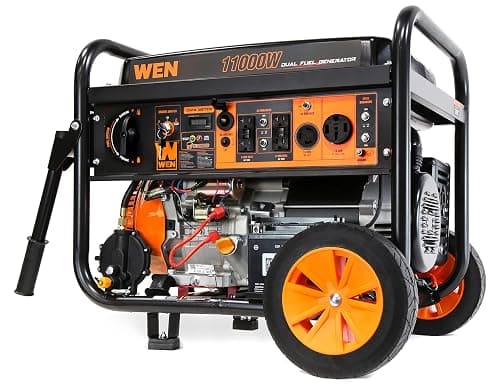
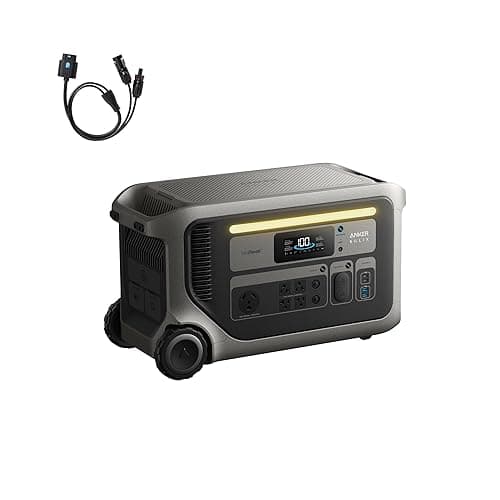
No ads. No data selling. This site runs entirely on Amazon affiliate commissions — buying through our links costs you nothing extra and keeps it free for everyone.
Read our mission →Frequently Asked Questions
Why does Texas have its own power grid?
Texas utilities kept their system inside state lines starting in the 1930s to avoid federal regulation of interstate electricity sales. That arrangement was formalized when ERCOT was created in 1970.
Is ERCOT regulated by the federal government?
Only lightly. Because ERCOT doesn't send power across state lines, it mostly falls outside the Federal Energy Regulatory Commission's jurisdiction and is instead overseen by Texas state regulators.
What caused the 2021 Texas power grid failure?
An extreme, prolonged cold snap froze natural gas equipment and power plants that weren't built for that kind of weather, taking roughly half the state's generating capacity offline right as heating demand hit a record high.
Has Texas fixed its power grid since Winter Storm Uri?
Partly. Mandatory weatherization rules, real penalties, and a large increase in battery storage have made a measurable difference. A 2025 audit, however, found weak enforcement of gas-side weatherization rules.
Can Texas import electricity from other states during an emergency?
Only in very small amounts. A few DC power lines connect ERCOT to neighboring grids, but their capacity is far too small to offset a major shortfall.
Which parts of Texas are most at risk of power outages?
It varies by hazard: Gulf Coast counties face the highest hurricane risk, while the rest of the state leans more toward winter-storm exposure. County-level grades show which counties have fared worst regardless of cause.
Is the Texas grid ready for another storm like Uri?
More resilient than in 2021, thanks to weatherization rules and battery storage — but federal regulators still rate ERCOT "elevated risk," so the honest answer is more prepared, not storm-proof.